IPTV from My IPTV Canada costs from CA$19 for one screen for one month up to CA$219 for four screens for twelve months, and for most households the real yearly bill is the subscription plus a one-off streaming device, because you already pay for the internet. A new customer on a 12-month, one-screen plan pays CA$79 and gets 14 months, which works out to about CA$5.64 a month.
That headline number is only half the answer. You also need the household total for year one, the cost of year two, and the extras that can creep in. The sections below use our real prices, so you can set each one next to your current TV bill and decide on arithmetic. For the checks beyond price, see how to choose the best IPTV in Canada.
Our published prices, every term and screen count
“Screens” are simultaneous connections: the number of TVs or devices that can play at the same moment. Prices are in Canadian dollars and are what you pay up front for the term; there is no automatic charge afterwards.
| Screens | 1 month | 3 months | 6 months | 12 months |
|---|---|---|---|---|
| 1 | $19 | $35 | $49 | $79 |
| 2 | $29 | $59 | $89 | $129 |
| 3 | $39 | $79 | $119 | $179 |
| 4 | $49 | $99 | $149 | $219 |
New customers on the 12-month plan also get two bonus months added, 14 months in total. The 1, 3 and 6-month plans have no bonus months. Renewals cost the same as the table but carry no bonus. These prices hold until April 14, 2027, after which they rise, so a longer term bought now locks in today’s rate for its whole length. The full, current list is always on the pricing page.
- 1 month CA$19
- 3 months CA$35
- 6 months CA$49
- 12 months CA$79 + 2 free
Shorter bar, lower monthly cost. Prices locked until April 14, 2027.
What each plan costs per month, with the bonus counted
The fair way to compare terms is price divided by months you actually receive. For a new customer:
| Plan | Pay | Months received | Per month |
|---|---|---|---|
| 1 screen, 12 months | $79 | 14 | about $5.64 |
| 2 screens, 12 months | $129 | 14 | about $9.21 |
| 3 screens, 12 months | $179 | 14 | about $12.79 |
| 4 screens, 12 months | $219 | 14 | about $15.64 |
| 2 screens, 6 months | $89 | 7 | about $12.71 |
| 2 screens, 3 months | $59 | 4 | $14.75 |
On renewal, with no bonus, the 12-month plans come to about $6.58, $10.75, $14.92 and $18.25 a month for one to four screens. That is the number to use for year two, and the one to put against any provider that advertises a first-year price only.
How much the longer terms actually save
The simplest saving to verify is a 12-month plan against buying the 3-month plan four times:
- 1 screen: $79 against 4 x $35 = $140, which is 43% less.
- 2 screens: $129 against 4 x $59 = $236, 45% less.
- 3 screens: $179 against 4 x $79 = $316, 43% less.
- 4 screens: $219 against 4 x $99 = $396, 44% less.
Those percentages come from our own price list, not a market survey, and they do not count the bonus months. If you are unsure about committing, the middle path is the 3 month plan; our guide to why the 12-month plan saves money shows where the break-even sits.
The total household cost in year one
A subscription is not the whole bill. Add up four lines:
- The subscription. From the tables above.
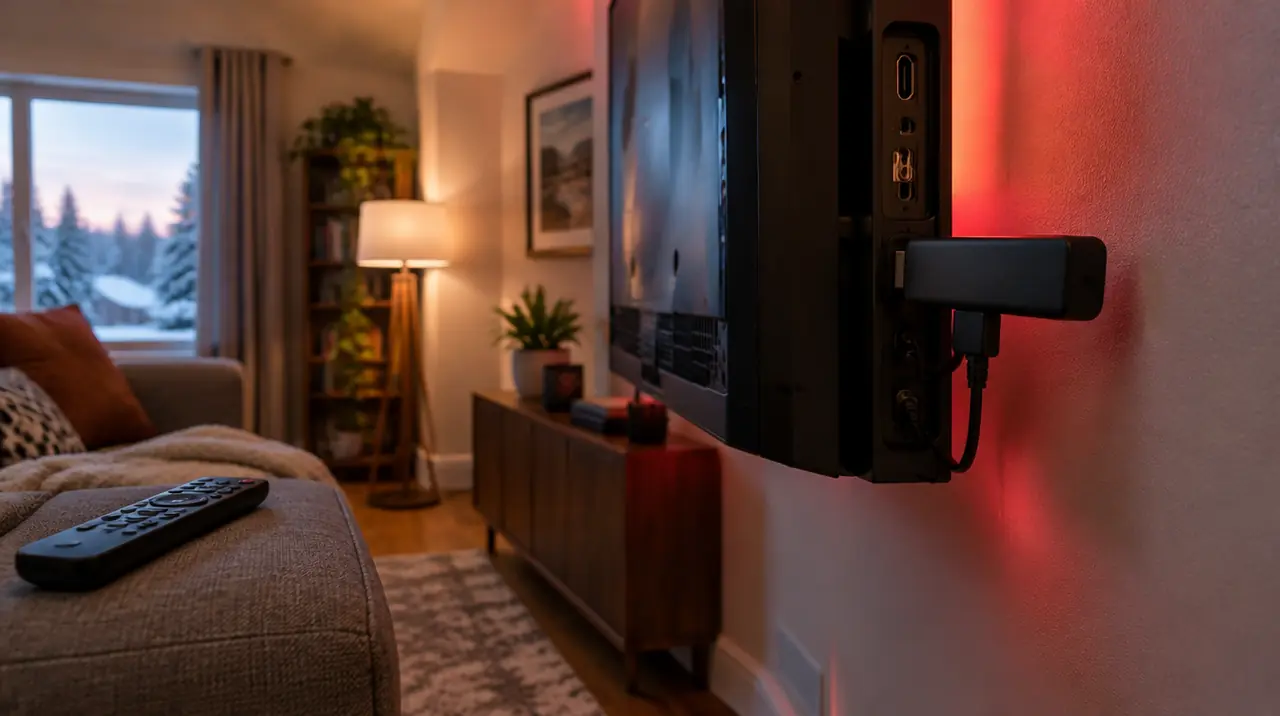
- A device per TV, if the TV lacks a suitable app. Many smart TVs from 2019 onward can run a player app with no extra hardware, but older Samsung, LG and Vizio sets often cannot, and the usual fix is a streaming stick or box. Typical street prices run from a few tens of dollars for a basic stick to well over a hundred for a high-end box, so check current retail before you budget. See which devices work.
- Internet. You almost certainly pay this already. What matters is whether the plan is fast enough for the number of screens you want; our speed guide gives the arithmetic.
- Anything cable gave you that you will replace. Local news, a specific sports package, a DVR. Decide what you truly watch before you cancel.
Three worked examples, all for a new customer in year one, and none include the device since many homes already own one:
- Retired couple, one TV, mostly news and movies: 1 screen, 12 months, CA$79 for 14 months. A one-off device, if needed, is the only other cost.
- Two adults and a teenager, living room plus bedroom: 2 screens, 12 months, CA$129 for 14 months.
- Hockey family, three screens on game night: 3 screens, 12 months, CA$179 for 14 months, about CA$12.79 a month for the household.
Putting it next to your cable bill
We will not guess at your cable price, because it varies by province, package and how many promotions have lapsed. Do it yourself in five minutes. Take your latest TV bill, strip out internet, add every rental, tax and add-on line, and multiply by 12. Then compare it with the annual figure for your plan above, plus a device if needed. Our fuller worked comparison is in cable versus IPTV costs in Canada, and a list of the bill lines most people miss is in our overpaying-for-TV guide.
One caution: if your TV, internet and phone are bundled, dropping the TV can raise the internet price, because the bundle discount disappears. Ask your provider for the internet-only price before you cancel, and use that figure in the comparison.
Hidden costs to ask any provider about
Whether you buy from us or anyone else, put these questions in writing before you pay:
- Is the price shown the price for the whole term, or an intro rate?
- What does renewal cost, and does it renew automatically? Ours is manual, with no automatic charges.
- Is there an activation, setup or app fee?
- Is there a refund period, in writing, and does it cost anything? Ours is 60 days from first paid activation, with no refund fee.
- Will they check the specific channel or event you care about before you pay? We will; just ask.
The point about checking a specific channel is a real one. We do not promise individual channels or events here, so message us first and get a straight answer. Legality also depends on content licensing, which this page cannot settle for you; our legality guide explains what to look at.
A three-year view, so year two does not surprise you
Most price pages show year one only. Here is the cost of staying put on a 12-month, two-screen plan, counting the bonus only in year one and assuming prices stay at today’s level (they will not after April 14, 2027, so treat this as a floor and re-check the pricing page at each renewal):
| Year | Pay that year | Months of service | Running total |
|---|---|---|---|
| Year 1 (new customer) | $129 | 14 | $129 |
| Year 2 (renewal) | $129 | 12 | $258 |
| Year 3 (renewal) | $129 | 12 | $387 |
The point is the shape: the first year is the cheapest per month because of the two bonus months, and later years are the standard rate. If a provider quotes only year-one cost per month, ask what year two looks like in writing.
Mistakes that make IPTV cost more than it should
- Buying four screens for a household that never plays more than two at once. Count peak simultaneous screens. A family with five TVs where two are watched together needs two connections.
- Buying a device before checking the TV. Look in the TV’s app store first. Samsung and LG sets vary by model year, which is covered in our Samsung Tizen and LG webOS guide.
- Choosing 1 month repeatedly. Month-to-month is the most expensive way to pay, and the only term without bonus months. It makes sense as a test, not as a habit.
- Cancelling cable before confirming what you watch. Write down the five channels or events your household would miss most, then ask us to check each one before paying.
- Forgetting the internet side. Four HD streams at once need a connection that can carry them. A cheaper TV plan is no saving if you must upgrade internet; check first.
How to test the value before you commit
The cheapest way to learn whether any TV service suits your house is to test it on your own TV, on a Friday or Saturday evening, with the exact channels and events you care about. Do this in order:
- Write your five must-have channels or events and message us on WhatsApp so we can check them before you pay.
- Take a short plan, such as 3 months, on the screen count you expect to use at peak.
- Test at prime time, roughly 7 to 10 pm, on the actual TV and network, not a phone on mobile data.
- If it works, renew onto a longer term when the short one ends; if it does not, use the 60-day guarantee. A free 24-hour trial is also available by WhatsApp message if you want a first look.
A price that only looks good when nothing goes wrong is not a price. Judge the total cost with the guarantee in view.
How paying works
Checkout on the site asks for your name, email and WhatsApp number only. We never ask for card details on the website. Payment is arranged with a real person on WhatsApp, by card through a secure payment link, before activation, and activation is instant once payment is confirmed. Renewals are done by you, on your schedule, through the renewal page, so nothing is charged without you knowing.
Which plan we would pick
- Not sure yet: 3 months on the screen count you expect. Short enough to be low risk, and you get a bonus month.
- Sure, one or two TVs: 12 months. This is where the bonus months and the 62 to 65 percent saving against the monthly price live.
- Three or more screens: count peak screens, not TVs. Our multi-screen planning guide walks through it, and it is cheaper to start with two and renew with more than to pay for four you never use at once.
It is also fair to say when we are not the right choice. If you need a specific live service we cannot confirm, or you depend on a provider’s bundled equipment and customer support in a store, an in-person service may suit you better. Ask us to check first, and remember the 60-day money-back guarantee if you do go ahead. Background on the wider trend is on Wikipedia’s pages about cord-cutting and IPTV.
Frequently asked questions
How much does IPTV cost per month in Canada?
With My IPTV Canada, one screen is CA$19 for a single month, or about CA$5.64 a month on a 12-month plan once a new customer's two bonus months are counted. Two to four screens run about CA$9 to CA$16 a month on 12 months. Renewals have no bonus months.
Is IPTV cheaper than cable in Canada?
It can be, but compare your own bill rather than trusting averages. Add rentals, taxes and add-ons, multiply by 12, then compare with the annual plan price plus any device. Ask your provider the internet-only price too, since bundles can change.
Are there hidden fees with IPTV?
Ask before paying. Check for activation or app fees, intro prices that rise, and automatic renewals. With My IPTV Canada the price is paid up front for the term, renewal is manual, and the 60-day money-back guarantee carries no refund fee.
Do I need to buy a device to use IPTV?
Only if your TV has no suitable app. Many newer smart TVs run a player directly. Older sets usually need a streaming stick or box, a one-off cost per TV. Check the supported devices page, or message us your TV model.
How much does IPTV cost for a family with 4 TVs?
Four screens cost CA$49 for one month or CA$219 for 12 months. A new customer on 12 months receives 14 months, about CA$15.64 a month. You only need as many screens as will play at once, so many families can start with two or three.
Does IPTV price go up after the first year?
Our current prices hold until April 14, 2027, then rise. Renewals have the same price as new plans but no bonus months, so budget year two at the standard rate. For example, one screen on a 12-month renewal is CA$79, about CA$6.58 a month, because renewals do not carry bonus months. Check the pricing page at renewal time.
Can I get a refund if IPTV does not work for me?
Eligible new paid subscriptions are covered by a 60-day money-back guarantee from first paid activation, with no refund fee. Request it through the refund page, WhatsApp or email. Test the channels you care about early in that window, and keep your message to us short and specific.
Sources
Your next step
Test the channels you actually watch.
Tell us your device, languages and preferred channels. We will help confirm availability and set up a free 24-hour trial. Read the plan and guarantee terms before paying.
Useful for someone else?
Share the guide without losing the context.